Reef Conservation Agreements: Protecting Marine Ecosystems
By Peter Mous.
Conservation agreements are essential tools for protecting coral reefs and ensuring the health of marine ecosystems. In the Banda Sea region, these agreements help local communities manage and preserve their valuable reef habitats from threats like overfishing and destructive practices. By working together, villagers can promote sustainable use while conserving biodiversity.
During conservation trips with Seven Seas in November 2020, April 2021, and November 2021, we visited various villages to see if the village administrations would be interested to engage in a conservation agreement with Yayasan Konservasi Alam Nusantara (YKAN), an Indonesian non-governmental organization. The idea is to involve villagers in conservation of the reefs near their village: the villagers commit to protect the reefs from fishing, in return for an annual payment or technical assistance for development of an environmentally friendly business. One of the villages we visited was Welora, in Maluku (East Indonesia). This village has become one of the candidates for development of a community‑managed marine reserve.
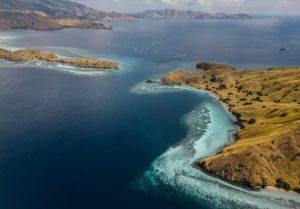
Welora village on Dawera Island may be the nicest, most tourism‑friendly village in eastern Indonesia. Dawera is a small, green island, measuring some six kilometers over its longest axis from northwest to southeast, with a narrow fringing reef surrounded by deep ocean (approximately 500 meters deep only a stone’s throw from the shore). The island is shaped like a low, multi‑layered wedding cake. This layered shape is common for islands in this area.
The streets of Welora village are well-kept, and the houses are well-maintained. There is a beach with parasols, a visitors center, a restaurant, and a marker dating back to the era of the VOC (the Dutch East India Company). A modern statue of a triton shell stands alongside signposts to help visitors avoid getting lost.
There is also a path along the northeastern shore to a secluded beach, where twin rubbish bins for waste separation look slightly out of place in this remote area. Welora is like a tiny version of Kuta in Bali, but more organized and without the party atmosphere.
Due to COVID‑19, there were no tourists at the time of our visit in November 2020, but banners showed that the district government has high hopes for tourism in the Forgotten Islands.
The fringing reef just in front of Welora village, on the northern tip of Dawera, is an excellent dive site. It features a pretty coral garden on a plateau about 15 meters deep, with steep walls on either side. The plateau surprised us with a small spawning aggregation (about 50 fish) of squaretail coral trout (Plectropomus areolatus). While this aggregation is not as spectacular as those on Meaterialam Atoll, the presence of a decent number of coral trout is a good sign, given the limited habitat available on the narrow fringing reef around the island.
At other times, the aggregation may be smaller or larger, as the formation of these spawning aggregations is seasonal and dependent on the moon phase. We visited the site a week after the full moon in November, which is right in the middle of the spawning season (October to January), but in terms of the moon phase, the aggregation was a couple of days past its monthly peak. The reef walls, festooned with gorgonians, soft corals, and barrel sponges, feature schools of fusiliers and Napoleon wrasse. Other sightings included a school of giant trevallies and many other species of reef fish.
We had a chat with the village head and with the secretary of the village about conservation of Welora’s reef, and the village administration was very supportive of the concept. The secretary of the village took the initiative to the next level through an impromptu ceremony complete with ratification of a statement‑of‑intent! Yayasan Konservasi Alam Nusantara will raise funds to protect the reefs around Dawera. The collaboration between Welora village, dive live‑aboards, local government, and YKAN will ensure that the reefs around Dawera will retain their current splendour and diversity, and that reef fish populations will recover to their pristine levels.
Reef Conservation Agreements (Reef Conservation Agreements di Serua)
Explore how Reef Conservation Agreements support marine ecosystems and empower local communities to protect coral reefs for future generations.
Reef Conservation Agreements are essential for maintaining the health of marine ecosystems in the Serua region.
Through Reef Conservation Agreements, local communities can actively participate in coral reef conservation efforts.
The implementation of Reef Conservation Agreements has shown positive results in protecting biodiversity in the area.
Learn how Reef Conservation Agreements help protect coral reefs and support local communities in Serua, ensuring sustainable marine biodiversity.
Reef Conservation Agreements in Serua play a vital role in conserving marine ecosystems while empowering local fishers to safeguard their reefs.
Discover the impact of Reef Conservation Agreements on reef protection and sustainable fishing practices in Serua’s unique marine environment.
Peter Mous
December 2021
NOTE :
To reserve your spots or see available trips, please check out our schedule page :
Schedule & Availability
Please also don’t hesitate to reach out to us at [email protected] should you require any further information or need recommendations for accommodation or flights etc. Our reservation team would be more than happy to assist. Cheers!
“Reef conservation agreements play a vital role in protecting biodiversity. For more details on how coral reefs support marine life, baca artikel kami tentang Coral Reef Ecosystems.”