Community Efforts in the Banda Sea to Protect Coral Reefs
By Mark Heighes.
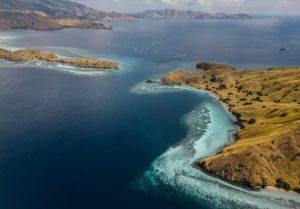
Efforts in the Banda Sea to conserve marine biodiversity have been gaining momentum in recent years. With increasing threats from overfishing and destructive practices like blast fishing and shark finning, it has become clear that urgent and effective action is needed to protect these fragile marine ecosystems.
In mid-2020, as the world slowed down due to COVID-19 and The Seven Seas was temporarily out of operation, an idea was born. Instead of staying idle, we saw an opportunity to give back to the ocean that has given us so much. With support from a long-time client and fellow ocean advocate, we began planning a mission-driven expedition.
By November 2020, we had assembled a special team of conservationists and photographers, all with extensive experience in Indonesia’s marine world. With financial backing to cover a significant portion of our expenses, we launched a month-long expedition across the Forgotten Islands and Banda Sea, aiming to initiate critical efforts in the Banda Sea to combat overfishing and reef degradation.
The core mission was clear: to collaborate with isolated local communities and help them establish community-based conservation initiatives. These included education, capacity building, and negotiating agreements that empower the villages to protect their surrounding marine environments from illegal and destructive fishing activities. Local communities have started various efforts in the Banda Sea to protect the reefs from overfishing, and our goal was to support and strengthen these initiatives.
Many of the threats in these areas come from outside fishers—often described as “pirates”—who have already depleted their home reefs and now target the untouched coral ecosystems of the Banda Sea. These intruders sometimes even offer small payments to local communities in exchange for fishing access, jeopardizing the long-term health of the reefs.
Thanks to over 35 years of exploration and relationship-building in the Banda Sea, we knew exactly which islands were most at risk. This experience allowed us to identify specific communities—such as Welora on Dawera Island, Jerili on Serua Island, and the island of Manuk—where we could make the most immediate impact.
“Local communities have started various conservation initiatives to protect the reefs from overfishing.”
The expedition was a success, resulting in local reef conservation agreements signed with village leaders. These agreements mark the beginning of long-term community-based reef protection. They empower villages to take ownership of their reefs and deter outside fishers from exploiting these areas.
We documented our journey through photographs, videos, and short stories shared via social media and newsletters, raising awareness about both the threats and the promising solutions. These successful efforts in the Banda Sea to protect coral reefs demonstrate that meaningful change is possible when local communities are included in the process.
Of course, challenges remain. Threatening challenges facing efforts in the Banda Sea include limited enforcement capacity, economic pressures, and lack of alternative livelihoods for some communities. Nonetheless, effective efforts in the Banda Sea for reef preservation are paving the way for a more sustainable future.
This initiative shows that conservation is most successful when it is local, inclusive, and backed by long-term support. As more communities see the benefits—both ecological and economic—of marine protection, we hope to expand these agreements and inspire similar action throughout Indonesia’s outer islands.
We are deeply grateful for the trust of the communities involved and the unwavering commitment of our partners and supporters. The reefs of the Banda Sea are not just beautiful—they are irreplaceable ecosystems worth protecting.
“Urgent efforts are needed in the Banda Sea to stop reef decline,” but with collaborative action, hope is on the horizon.
Due to the success of the first expedition, and with Seven Seas still suffering the effects of Covid in 2021, we contacted our donor. She was up for another expedition. Wow! We now had the ability to launch another expedition in April 2021.
This time, we targeted the northern Banda and Flores Seas. During this expedition, we identified a new area of interest named Tayandu. Tayandu is located in the Kei island group.
We were also able to follow up on another program that we started two years ago in a remote, uninhabited island group named Lucipara, or more appropriately Pulau Pulau Penyu (Islands of the Turtles).
The conservation of Lucipara is an idea that I have been trying to get off the ground since first visiting the Islands in the mid-80s. As a result of our combined efforts, Lucipara is well on its way to being declared a marine protected area.
None of this would have been possible without funding from our repeat guest (who wishes to remain anonymous). She generously supplied the fuel for both of these expeditions. She also kick started the Lucipara project with funding two years ago.
The late photographer, adventurer, writer and all-round terrific bloke Tommy Schultz, who was onboard the first expedition in November 2020 named the 1000 nautical mile Voyage Epic…and it stuck! That trip became Epic 1 and the next in April 2021 became the Epic 2 expedition.
We now plan to follow up on the successful conservation efforts in the Banda Sea by launching Epic 3, scheduled for November 1–16. This next phase will involve direct follow-up work with the local communities that have signed reef conservation agreements during previous expeditions. In addition to these activities, we will expand our efforts by engaging with new communities in the Tayandu Islands, assessing their needs, and exploring opportunities for future collaboration.
As with Epic 1 and Epic 2, this expedition will feature a dedicated team of Indonesian nationals led by long-time friend and trusted shipmate, Peter Mous. Peter has been at the forefront of conservation efforts in Indonesia for the past 23 years. He currently heads a project with Yayasan Konservasi Alam Nusantara (YKAN)—an Indonesian branch of the globally respected NGO, The Nature Conservancy.
These ongoing efforts in the Banda Sea reflect a growing movement toward empowering local communities to protect and manage their marine ecosystems.
YKAN specializes in community-based marine conservation, working directly with villages to help safeguard coral reefs and support sustainable fishing practices. Their involvement in Epic 3 underscores the shared commitment to preserving the Banda Sea’s unparalleled biodiversity before it is lost to unsustainable exploitation.
Efforts in the Banda Sea require more than goodwill—they need resources, collaboration, and continued support.
We believe in what we’re doing, and we’re proud to support YKAN in this mission. If you would like to contribute to the ongoing efforts in the Banda Sea and help make Epic 3 a success, please refer to the donation information on page 3.
All donations are tax-deductible and will be used exclusively for non-profit purposes. Funds will primarily go toward covering the Seven Seas’ operating costs for hosting the YKAN team aboard during the November expedition. Any surplus donations will be directed entirely to the YKAN project, supporting their continued work with Indonesian coastal communities as they fight to protect their unique marine environments.
Mark Heighes
September 2021
STRINGS OF PEARLS IN EASTERN INDONESIA – A PLAN TO CONSERVE REEFS AROUND SMALL, REMOTE ISLANDS, TOGETHER WITH ISLAND COMMUNITIES AND ECO-TOURISM OPERATORS
The small islands in eastern Indonesia feature unique reefs, which are often excellent dive destinations. They are worthy of conservation, but their remoteness makes it difficult to establish a conservation program. It is difficult to deploy permanent rangers, and also deployment of patrols is too costly. Fortunately, there are two groups who can help out: The islanders themselves, and Indonesia’s fleet of liveaboards, who frequently visit these islands. YKAN is developing an initiative to involve island communities in conservation, in collaboration with the live-aboard association (JANGKAR). We are asking your help to support this initiative.
With your help, YKAN will do the following:
- Agree with village community which reefs needs protection
- Establish a conservation agreement with the villagers who frequently visit the reef and with the village administration, where the villagers agree to protect the reefs from fishing and other destructive use. The reefs will remain open for visitation. The village community will receive an annual cash payment for their help.
- Have meetings with local government to ensure that they are aware of this village-based initiative
- Appoint one of the community members as a conservation steward, establish a reporting mechanisms and a means of communication with the steward
- Work with the liveaboard fleet to help with supplies for participating village communities, and with monitoring of the conservation agreement
- Appoint a coordinator, based in Bali, who will keep in contact with the conservation stewards and with the liveaboards
It takes US$ 50,000 to get a first site going for one year. This will cover expenses for community engagement and mobilization of a conservation stewards. YKAN will cover costs for its personnel and for coordination. YKAN will develop a program that raises funds in Indonesia to support this initiative over the coming years.
Yayasan Konservasi Alam Nusantara is an Indonesian non-profit, and it is an affiliate of The Nature Conservancy (nature.org).
Peter Mous
[email protected]
INFORMATION FOR MAKING DONATIONS
For USA Residents
It is very important that donors send an email to
Maricar Boyle, [email protected],
Peter Mous, [email protected] and
Naomi Lumangkun, [email protected]
with the following details:
- the name of the donor (and the name of the bank account holder if it is a wire transfer)
- the amount
- the text: “TNC Indonesia marine conservation agreements”
In that way, we can track the payment.
Donations can be made
By Cheque
The Nature Conservancy
Attn: Treasury/Maricar Boyle (Asia Pacific)
4245 N. Fairfax Drive, Suite 100
Arlington, VA 22203 USA
By Wire Transfer
Bank Name: Bank of America
Bank Address: 1111 E. Main Street, Richmond, VA 23219
ABA Routing Number: 026009593 (incoming wires-U.S.)
SWIFT Code: BOFAUS3N (incoming wires-International)
Account Name: The Nature Conservancy
Account Number: 004112981822
For Australian Residents
It is very important that donors send an email to
Simon Habel, [email protected],
Peter Mous, [email protected] and
Naomi Lumangkun, [email protected]
With the following details:
- the name of the donor (i.e. the name of the bank account holder who made the transfer)
- the amount
- the text: “Indonesian marine conservation agreements”
In that way, we can track the payment. The donors will then receive a tax receipt from Simon.
Donations should be made to the following account:
Bank Name: ANZ Bank, 123 Eagle Street, Brisbane
Account Name: The Nature Conservancy Australia Trust
BSB number: 014 015
Account No: 4995 65763
SWIFT: ANZBAU3MXXX
Learn more about our coral reef conservation projects in nearby regions to see how local communities are involved.